




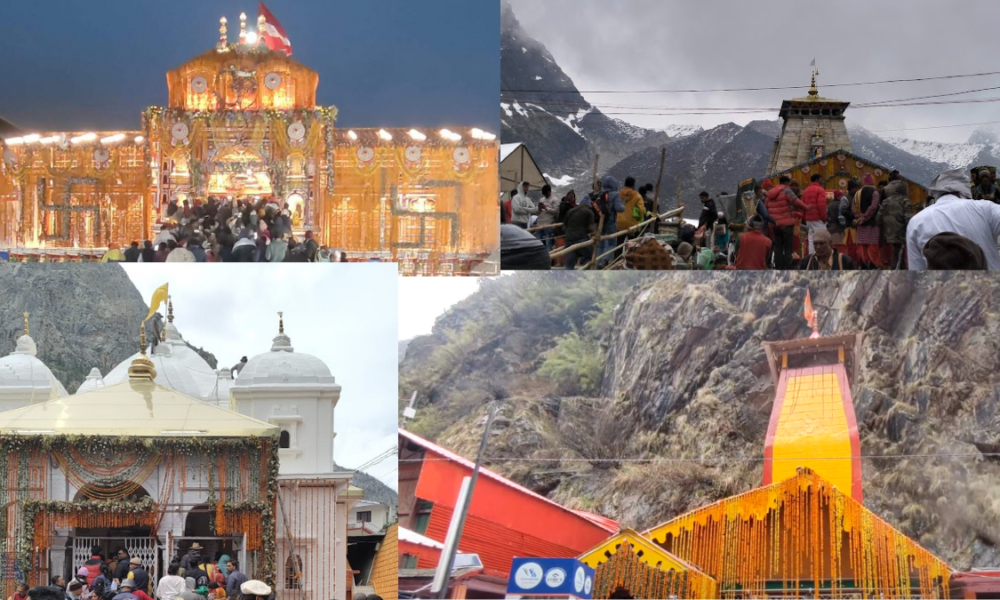
Choti Char Dham Yatra

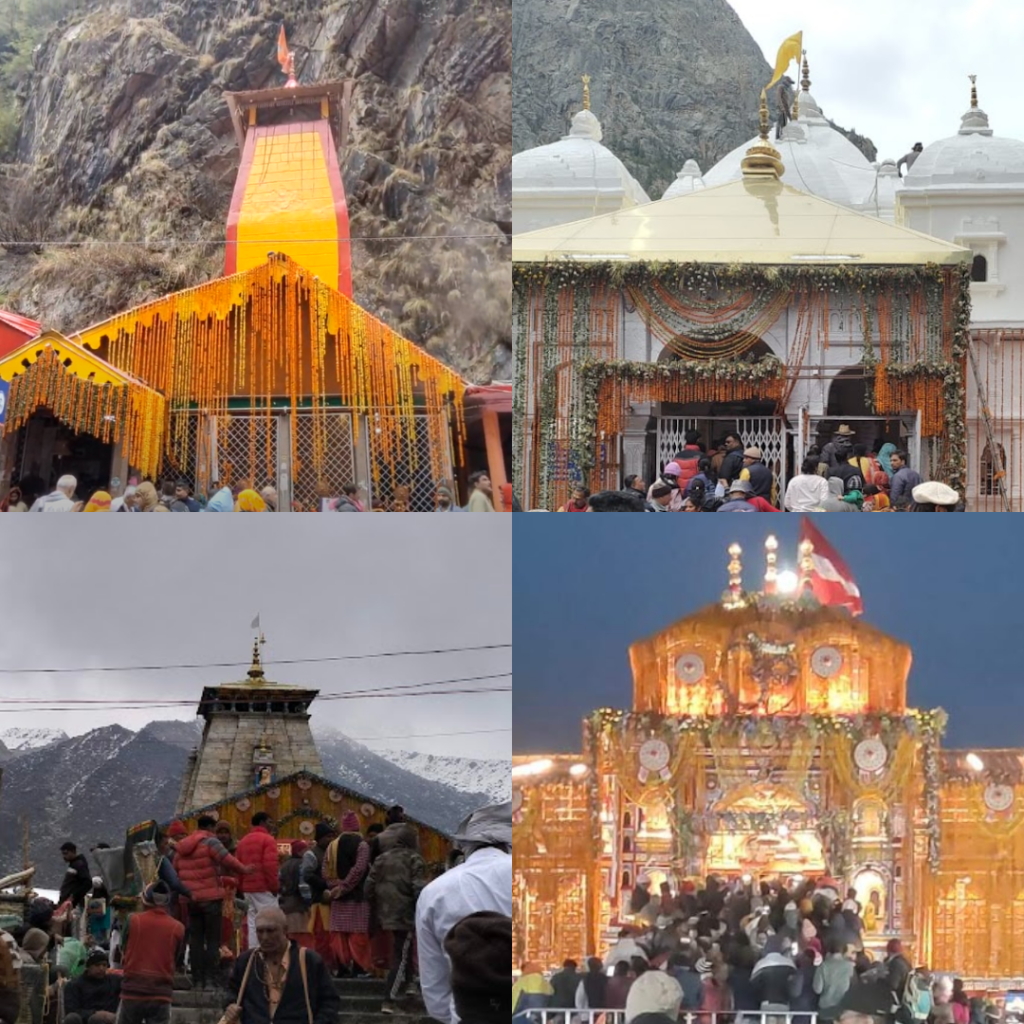
This is a Hindu yatra, or pilgrimage tour, comprising four holy sites: Yamunotri, Gangotri, Kedarnath, and Badrinath.
All of these holy places are situated in the foothills of the Himalayas in the state of Uttarakhand, India. Uttarakhand, also known as Devbhoomi, receives this name for its abundance of temples dedicated to Hindu gods, where devotees come to seek blessings throughout the year. Although the high-altitude shrines of the Char Dham are closed for six months due to heavy snowfall and harsh winters, the yatra is best completed clockwise, starting from Yamunotri, Gangotri, Kedarnath, and Badrinath. Let’s learn more about these mysterious temples and the importance of the yatra. Also you can get your Chota Char Dham Yatra Package from Realm of Dream India Private Limited for best rates and services.
Table of Contents
Yamunotri

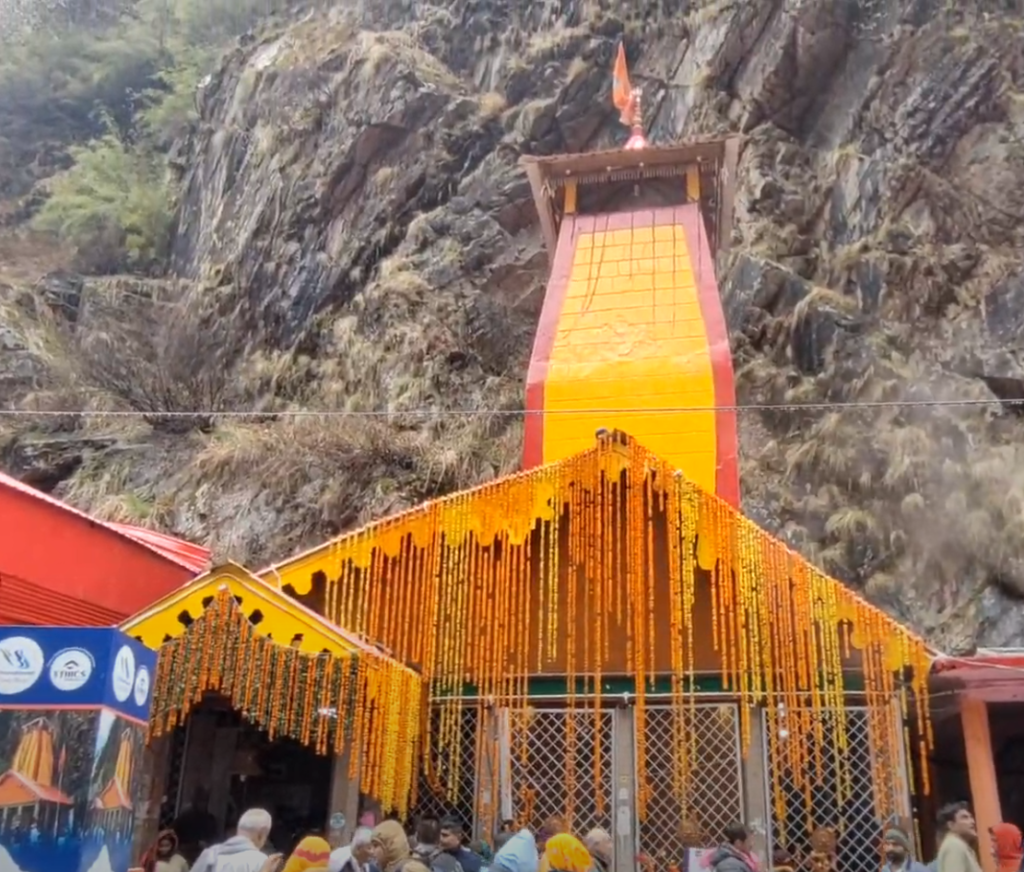
Yamunotri, situated at an elevation of 3,293 meters (10,804 ft) in the Garhwal Himalayas, 129 km from Uttarkashi, is the source (Udgam) of the sacred Yamuna River, the second most sacred river in India to the Ganga. To reach the temple and seek blessings of Goddess Yamuna, a trek of about 7 km (according to some sources) is required.
Facts about the Yamunotri Temple:
- The actual source of the Yamuna River lies in the Yamunotri Glacier, at a height of 6,387 meters (20,955 ft) near the Bandarpunch peaks in the Lower Himalayas. This area, a path strewn with rocks and requiring steep climbing, is inaccessible to devotees. Hence, they offer prayers at the temple itself.
- The Yamunotri temple, on the left bank of the Yamuna, dates back to Maharaja Pratap Shah of Tehri Garhwal. The deity is made of black marble.
- The hot spring here, named ‘Surya Kund’, boils rice and potatoes within seconds. The water is nearly 90 degrees Celsius.
- Separate hot water bathing rooms are available for men and women, fed by the same hot spring.
- Goddess Yamuna is the daughter of Surya (The Sun God) and sister of Yama (The Lord of Death).
- When the temple closes on ‘Bhai dooj’, the deity is carried to the village of Kharsali, situated 2 km from Janki Chatti.
Gangotri


Gangotri, situated in the Uttarkashi district of Uttarakhand, is the source (“Udgam”) of the holy Ganga River. It lies 99 km from Uttarkashi, nestled amidst the grandeur of the Greater Himalayan Range at an altitude of 3,100 meters (10,200 ft). Legend has it that Goddess Ganga descended here after being released from Lord Shiva’s hair. Fortunately, vehicles can reach the Gangotri temple itself, with only a 2 km walk required to access the main shrine.
Here are some interesting facts about the temple:
- The river originates as Bhagirathi, acquiring the name “Ganga” (Ganges) only after Devprayag.
- The source, Gaumukh, lies 19 km away and requires medical clearance and permission from the local authorities for individuals to trek there.
- During winter closures, the idol of Maa Ganga is taken to Mukhba Village for safekeeping.
- Hindu texts narrate that King Bhagiratha’s arduous penance for centuries led Ganga to descend as a river, absolving his ancestors’ sins. The Bhagiratha Shila marks the spot where he meditated.
- Legend speaks of a submerged Shiva Linga (“Shiv Ling”) within the Gangotri glacier, the source of the Ganga.
- A small cave, known as Pandavas Gufa, is said to have served as a shelter for the Pandavas during their quest for salvation.
Kedarnath

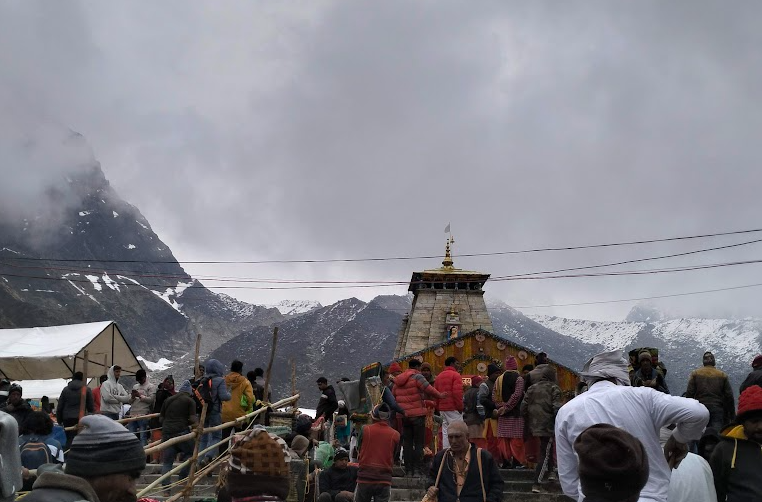
Kedarnath is a town and Nagar panchayat in the Rudraprayag district of Uttarakhand. It lies approximately 86 to 90 kilometres from Rudraprayag. Located in the Himalayas, it sits about 3,583 meters (11,755 feet) above sea level near the Chorabari Glacier, the source of the Mandakini River. The town is flanked by snow-capped peaks, most prominently Kedarnath Mountain. The nearest road head is at Gaurikund, roughly 16 kilometres away.It houses one of the 12 Jyotirlingas of Shiva.
Here are some facts about the Kedarnath temple:
- Unlike other Jyotirlingas, the lingam here is not a sculpted structure but a natural rock formation resembling a lingam. Legend states that when the Pandavas sought forgiveness from Lord Shiva for the bloodshed of the Mahabharata war, he, upset by the deaths of so many, disappeared and later manifested himself in the form of a bull. Hence, the presence of the “Peeth,” or hump of the bull, here.
- The Bhairavnath Temple is believed to be the guardian of Kedarnath. Devotees believe that Bhairavnath protects the main temple during the winter months when it remains closed.
- Behind the Kedarnath temple lies the samadhi (tomb) of the revered Adi Shankaracharya, who is credited with establishing the Char Dham pilgrimage circuit. He attained enlightenment here at a young age.
- During the devastating 2013 Uttarakhand floods, the surrounding areas of Kedarnath suffered immense damage. However, the Kedarnath temple itself remained mostly intact. Devotees believe a large rock behind the temple miraculously diverted the floodwaters, protecting the shrine.
- Kedarnath Dham is also believed to be the gateway to heaven, as many who visit feel as though they have stepped into paradise.
- It is further said that while official reports claim the 2013 floods caused around 6,000 deaths, locals believe the toll was significantly higher, with many bodies still missing.
Badrinath

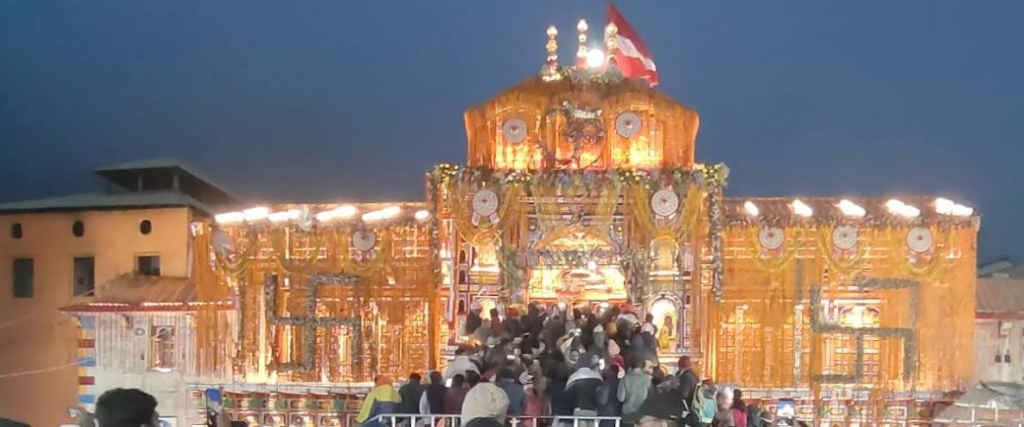
Badrinath is a Hindu holy town located in the Chamoli district of Uttarakhand, India. It is the final stop among the four pilgrimage sites of the Chota Char Dham Yatra. The town features a temple dedicated to “Badari,” an epithet of Lord Vishnu. The temple, situated at an elevation of 3,300 meters (10,800 feet), has an architectural style resembling a Buddhist vihara (temple) with a brightly painted façade, also characteristic of Buddhist temples.
Here are some interesting facts about the Badrinath temple:
- Among the eight significant Vaikunthas (abodes of Lord Vishnu), Badrinath is considered the second one, after Kshir Sagar (the ocean of milk).
- While Lord Vishnu is the main deity worshipped at Badrinath, it is believed that Lord Shiva originally owned this land. He later gifted it to Lord Vishnu as a token of respect.
- Interestingly, the site of Badrinath is said to have served as a Buddhist pilgrimage center during the reign of Emperor Ashoka. Later, Adi Shankaracharya established it as a prominent Hindu pilgrimage destination.
- During the six months when the temple is closed due to harsh winter conditions, an “Akhand Jyoti” (eternal flame) continues to burn inside the sanctum sanctorum. This flame is kept alive by the priests who relocate to nearby Joshimath during this period.
- Though the conch shell is associated with Lord Vishnu, it is interestingly prohibited inside the temple premises. Legends attribute this to a dispute between two celestial musicians, Narada and Gandharva, where the conch was damaged.
- “Badari” is the name of the Jujube tree. It is believed that Goddess Laxmi manifested as “Badari” to protect Lord Vishnu during his penance.
The Significance of Chota Char Dham Yatra
- Wash away sins and achieve spiritual merit.
- Bring one closer to attaining moksha, liberation from the cycle of rebirth.
- Fulfill a lifelong desire for many Hindus.
- It is said to provide deep inner peace and awakening in a person
- The journey allows pilgrims to connect with their spiritual heritage and experience the unique culture and traditions
Conclusion
Everybody wishes to visit these heavenly temples once in their lifetime, I got lucky and had the chance to visit them last year. Let me tell you it’s not as easy and needs proper planning as the areas are of high altitudes. Check out my next blog to know how can you plan a trip to the Char Dham and get the best out of it. You ca book the yatra through my travel company. Just comment below to know more.
Interested about more spiritual places check out this blog: Top Pilgrimage Places in India